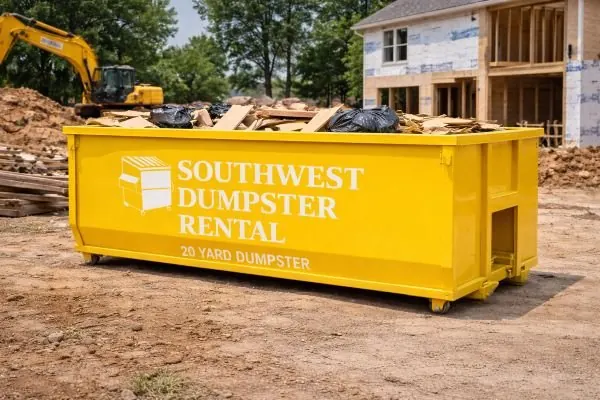
Construction dumpster rental, explained
A construction dumpster is an open-top roll-off, usually 20 to 40 cubic yards, placed on a job site and swapped or hauled when full. In Arizona, call (480) 680-8771 with the site address, the type of work and how long it will run; we refer the job to an independent local hauler that quotes and services it.
What construction jobs produce
- Framing and carpentry: lumber offcuts, sheathing, packaging, pallets.
- Drywall and interior finish: gypsum board, trim, flooring, cabinets.
- Roofing: tile, shingles, underlayment. Concrete tile, common across the Valley, is very heavy.
- Demolition: wood, plaster, stucco, block and concrete.
- Site cleanup: brush, landscaping debris, broken pavers.
Sizing and swaps
For an addition or kitchen-and-bath remodel, a 20-yard is common. Whole-house remodels and roof replacements often use a 30-yard. New builds use 30- or 40-yard containers, swapped as needed. If heavy material is involved, ask for a separate small box for concrete, block and rock; a 40-yard full of masonry would be far beyond any normal weight allowance.
Placement on Arizona sites
Infill lots in central Phoenix, Tempe and Scottsdale are tight. Decide where the container goes before work starts, so it is not blocked by materials deliveries. Keep a clear, straight run for the truck. Street placement generally needs permission from the city's right-of-way office. In subdivisions under construction, the builder or HOA may have its own rules.
Dust and debris
Maricopa County regulates dust from many construction, demolition and earthmoving activities, and Pima County has similar rules. Load the box carefully, keep debris below the top edge, and cover it when wind picks up. Monsoon dust storms can lift loose material out of an open container.
Asbestos and older buildings
Older buildings can contain asbestos in flooring, pipe insulation, drywall compound and roofing. Federal rules and county air-quality programs set notification and handling requirements before demolition. Standard roll-off providers do not take asbestos-containing material; your contractor should test before demolition.
Heat on the job
Crews in Arizona summers start early and stop by afternoon. Plan swaps for the morning, and remember that a steel container in full sun can burn skin by midday.
Swaps on active sites
Agree the swap routine before work starts: who calls for it, how much notice the provider needs, and where the empty container should land. A clear spot for the truck saves time on every swap.