What can you put in a dumpster in Arizona? If you’re renting a dumpster for the first time, one of the most common questions is: “What can I actually put in it?” While dumpsters are designed to handle a wide range of materials, there are important rules to follow to avoid extra fees or disposal issues.
This guide explains what you can put in a dumpster, what items are restricted, and how to dispose of waste properly during your project in Arizona—especially when planning a dumpster rental for home or construction use.
Why Dumpster Rules Matter
Dumpster rental rules exist for safety, environmental protection, and legal compliance. Landfills and disposal facilities have strict guidelines, and certain materials require special handling.
These rules can vary slightly by location, including cities like Mesa, AZ, depending on disposal facilities and local regulations.
Following these rules helps:
- Prevent environmental harm
- Avoid safety risks
- Eliminate surprise fees
- Ensure proper disposal
When in doubt, it’s always better to ask before loading.
Common Items You Can Put in a Dumpster
Most dumpster rentals in Arizona are suitable for non-hazardous household, construction, and yard waste.
Household Junk
You can safely dispose of:
- Furniture such as sofas, chairs, and tables
- Mattresses and box springs
- Clothing and textiles
- Toys and household clutter
These items are commonly removed during cleanouts and remodeling projects.
Construction and Renovation Debris
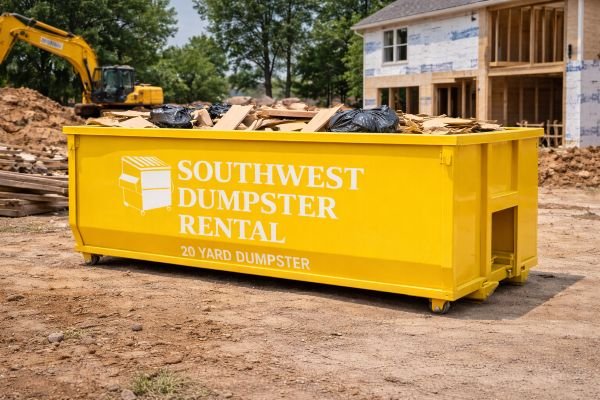
Dumpsters are ideal for construction-related waste, including:
- Drywall and insulation
- Wood, lumber, and trim
- Flooring, tile, and carpet
- Cabinets and fixtures
As long as materials are non-hazardous, they are typically accepted.
Yard Waste and Landscaping Debris
Most dumpsters allow:
- Tree branches and leaves
- Grass clippings
- Bushes and shrubs
- Small amounts of dirt or sod
Be mindful of weight limits when disposing of soil or heavy landscaping materials.
Roofing Materials
Roofing debris is commonly allowed, including:
- Asphalt shingles
- Roofing underlayment
- Wood decking
Because roofing materials are heavy, choosing the correct dumpster size is important to avoid overage fees.
Items That Are Typically Not Allowed
Certain materials are restricted due to safety, environmental, or regulatory concerns.
Hazardous Waste
Do not place the following in a dumpster:
- Paints, solvents, and chemicals
- Motor oil and fuel
- Pesticides and herbicides
- Cleaning chemicals
These items must be taken to approved hazardous waste facilities.
Electronics and Batteries
Many disposal facilities restrict:
- Televisions and computer monitors
- Batteries, especially lithium-ion
- Certain electronic components
Local recycling programs often provide safer disposal options.
Tires and Automotive Parts
Tires are commonly restricted due to landfill regulations. Some automotive parts may require special disposal approval.
Medical and Biohazard Waste
Items such as needles, medical supplies, or biological waste are never allowed in standard dumpsters.
Special Items That May Be Allowed With Approval
Some materials may be accepted with prior approval or additional fees, including:
- Appliances
- Scrap metal
- Certain electronics
- Small amounts of concrete or dirt
Always ask before placing these items in your dumpster.
How to Load a Dumpster Properly
Proper loading helps maximize space and avoid problems:
- Break down large items
- Distribute weight evenly
- Keep debris below the fill line
- Avoid placing items on top of the dumpster
Overfilled dumpsters may not be hauled for safety reasons.
What Happens If You Put Prohibited Items in a Dumpster?
Placing restricted items in a dumpster can result in:
- Additional disposal fees
- Delayed pickup
- Fines from disposal facilities
- Environmental compliance issues
A quick question before loading can prevent these problems.
How to Dispose of Restricted Items in Arizona
Arizona offers several alternatives for restricted waste:
- Household hazardous waste collection events
- Electronics recycling centers
- Tire recycling facilities
- Local transfer stations
City or county websites often list approved disposal options.
When in Doubt, Ask First
Every project is different, and disposal rules can vary by landfill. If you’re unsure about an item, the safest option is to ask your dumpster rental provider before loading it.
At Dumpster Rental Arizona, we help customers understand what’s allowed so their projects run smoothly.
📞 Call us before loading if you’re unsure about an item.
💬 Friendly guidance and clear answers.
🚚 Reliable dumpster rental across Arizona.